Under The Java Plum
*
Under The Java Plum *
Under the Java Plum
The oldest trees here — Pine, Cypress, Oak, native palms — have been standing for decades. They're the overstory. They shelter everything below them, hold the warmth in winter, and draw in the wildlife that belongs here.
What's grown up beneath them is ours. Mangoes, soursop, plantains, pink guava, dwarf nam-wan banana, blue java banana, papaya — the understory filling out now with things worth harvesting.
The Plum Trail runs from the main property out to the Java Plum. The goal is a lane where every few steps you're reaching for something — Surinam cherry, Barbados cherry, mulberries fruiting across the whole season. Support species like Mexican sunflower and Napier grass woven through — chopped and dropped to build the soil and feed everything around them. Vines climbing the palms for color. And already threading along the ground — pumpkins pushing out yellow flowers alongside the Everglades tomatoes. Red, orange, yellow. It's already beautiful and it's just getting started.
Walk it to the end and you arrive under the Java Plum — by far the biggest canopy tree on the property. There is nothing else on these four acres that comes close. It stands out in the open, spreading wide, doing what Java Plums do when you give them room. The moment you step under it the temperature drops and a breeze finds you.
I could stay here.
A place to sit. A place to have lunch. A grafting station, a propagation table — this is where the magic begins. The whole perimeter still being planted out, the vision still taking shape.
This Saturday we're putting the next layer in.
You'll go home with something — cuttings, fruit, knowledge you didn't have when you arrived. And you'll know what you built.
Reach out if you want to be part of Saturday. Tell us what draws you to this kind of work.
The fruits of your labor will be enjoyed by many for years to come.
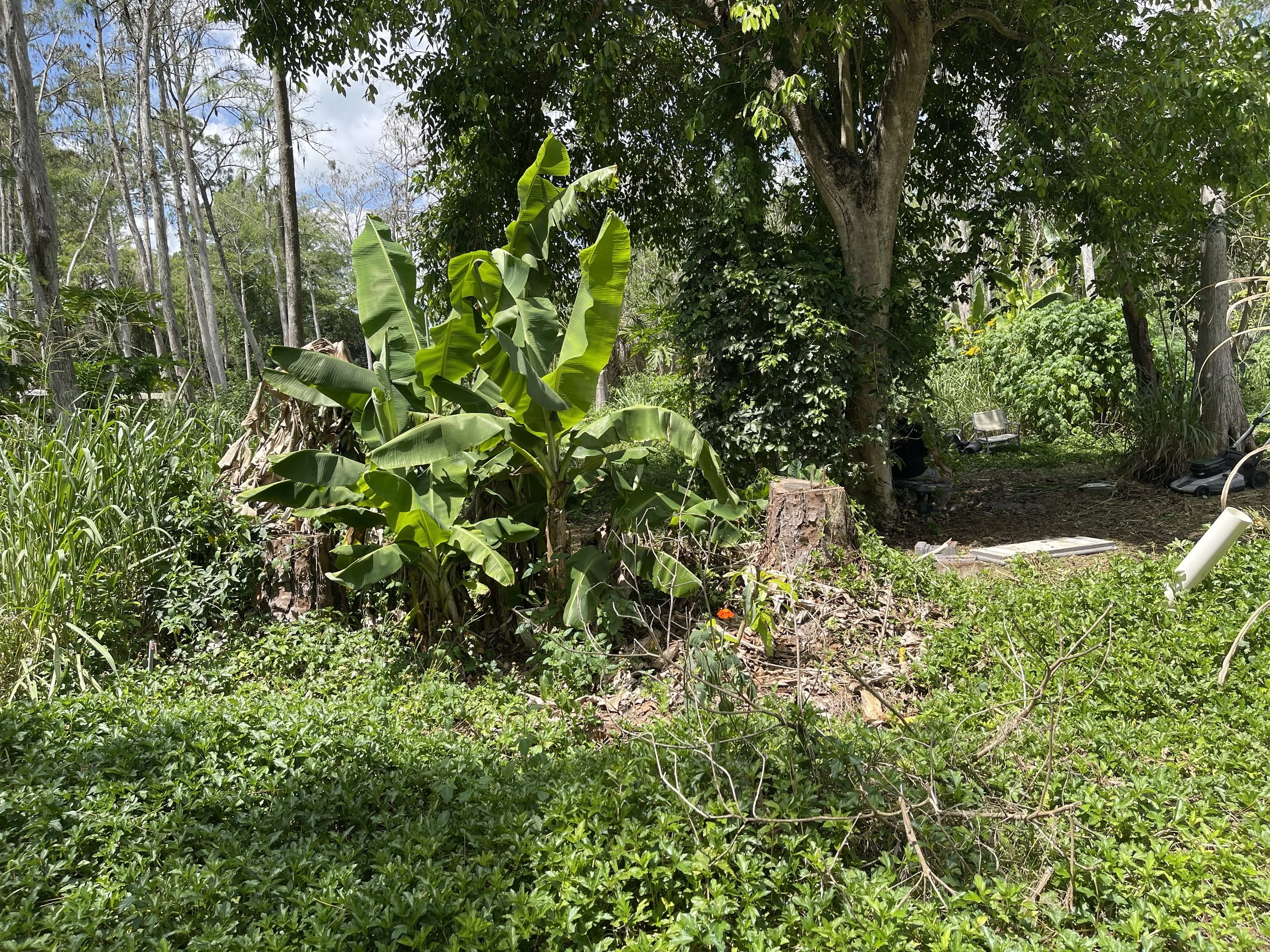
Cuban Red— Banana Circle
Not all bananas are created equal. The Cuban Red is larger, sweeter, and softer than anything you'll find in a grocery store — and it thrives here. This circle is a dedicated growing zone for one of the farm's most beloved varieties. When they're ready, you'll know.
The Community Herb Garden
Started as a kitchen garden. Grew into something worth sharing. This is an open herb garden for the people who work and volunteer on the farm — take cuttings, learn what grows here, bring something home. rosemary, thyme, sage, Italian oregano, Dominican oregano, sage, basil, and whatever else decides to thrive. A working garden, not a display.
Medicine Cabinet
Long before there were pharmacies, there were plants. This section of the farm is dedicated entirely to species known for their medicinal and wellness properties — Aloe Vera, Soursop, Cuban oregano, Moringa, Lemongrass, Hibiscus, Ginger, turmeric, Porter weed, Wild Beauty berry, and others with deep roots in traditional healing. Not prescriptions. Not promises. Just a reminder of what people knew before they stopped paying attention.
Salad Bar
Every edible leaf on the property — gathered in one place. Moringa. Longevity Spinach. Malabar Spinach. Okinawa Spinach. Chaya (Mexican Tree Spinach). Katuk. Cranberry Hibiscus. Cuban Oregano. And more being added. This is a living demonstration of what a food forest can actually produce — and a resource for anyone who wants to learn what's growing right in front of them.
The Butterfly Garden & Natural Habitat
Florida had something before we got here. This section of the property is dedicated to keeping it. Native plants — Blue Plumbago, Porterweed, Pineywoods Sunflower, and others — grown specifically to attract butterflies, bees, and pollinators. No maintenance required. No edibles needed. Just the plants that belong here, doing what they've always done. A living reminder that not everything needs to be managed to be valuable.
The Monstera Garden
Not everything on this farm needs to end up on a plate.
My wife has been propagating Variegated Monstera Deliciosa — one of the most visually stunning plants you can grow in Southwest Florida. Hardy enough for the outdoors. Beautiful enough for your living room. The variegated variety, with its dramatic split between deep green and cream white, is the kind of plant that stops people mid-conversation.
She started with a few. Now there are more. And if you've ever wanted one for your home — or wanted to learn how to propagate your own — this is the place.
Coming soon.
The Hidden Harvest
Most people have never heard of it. The ones who have never forget it.
Ñame — pronounced nyah-may — is a root crop with deep roots in Caribbean and Latin American culture. Plant it around a tree, leave it alone, and a year later you pull something remarkable out of the ground. Purple flesh. White flesh. Massive yields from almost no effort. Milo brought the first ones here years ago and what came out of the ground stopped everyone who saw it.
We have the land. We have the trees. We have the history with this crop. Now we're doing it right — planting deliberately, harvesting in volume, and making sure the people who grew up with ñame on their table know exactly where to find it.
Coming soon.
The Pond
Still in the planning stages — but it's coming. A thoughtfully designed pond that becomes part of the farm ecosystem. Water, wildlife, and a place on the property that slows everything down. If you have experience in pond design or construction and want to be part of making this happen, we'd love to hear from you.
The Apiary
Someone has to keep the bees. Why not here? This is a dedicated beekeeping section of the farm — open to helpers and volunteers who want to learn the craft, tend the hives, and take home what they produce. The farm gets the honey it needs. The beekeeper keeps the rest. A partnership as old as farming itself.
The Quail Coop
Coming soon